Tennessee Emergency Vehicle Accident Claims
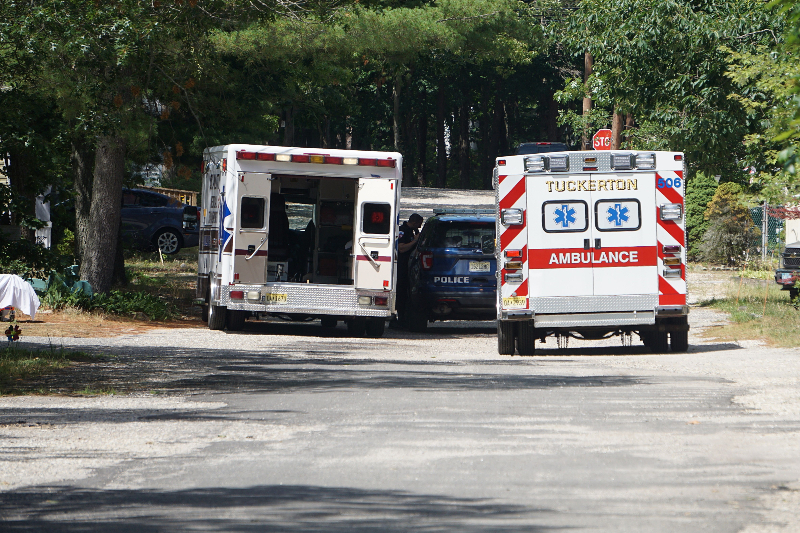
If a police car, ambulance, or fire truck hit you in Tennessee, you can bring a claim, but the rules are different from an ordinary crash. Emergency vehicle drivers get certain privileges when responding to a call with lights and siren running. Those privileges have limits. State law is explicit that they do not relieve the driver of the duty to drive with due regard for everyone’s safety, and they do not shield a driver from the consequences of reckless disregard for others. Because most of these vehicles are government-owned, a separate law with a shorter deadline and damage caps controls the claim.
Time is the biggest trap here. Government claims move on a tighter schedule.
Table of Contents
What Are Emergency Vehicles Allowed to Do?
Under Tennessee Code Section 55-8-108, a driver of an authorized emergency vehicle who is responding to an emergency call, pursuing a suspected violator, or responding to a fire alarm may:
- Park or stand where parking rules would otherwise prohibit it
- Proceed past a red light or stop sign, but only after slowing down as necessary for safe operation
- Exceed the speed limit so long as life or property is not endangered
- Disregard rules on direction of movement and turning
Two conditions matter enormously.
First, the signals requirement. These exemptions apply only when the vehicle is using audible and visual signals meeting state requirements. A cruiser running a red light with no lights or siren is not covered by the exemption. Parked or standing emergency vehicles need only visual signals.
Second, the due regard limit. Section 55-8-108(b)(2) states that the privileges do not relieve the driver of the duty to drive with due regard for the safety of all persons, and do not protect the driver from the consequences of reckless disregard for the safety of others. The University of Tennessee’s Municipal Technical Advisory Service summarizes these duties for city officials.
That “due regard” language is the heart of most claims.
When Is an Emergency Vehicle Driver Liable?
Common fact patterns that support a claim:
- Running a red light without slowing down first
- Operating with no lights or siren while claiming emergency status
- Speeding at a rate that endangered life or property
- Responding to a non-emergency call while driving as if it were one
- Distracted driving, including radio and laptop use
- Backing or turning without looking
- Poor vehicle maintenance, such as failed brakes on an ambulance
The claim is not that emergency responders must obey every traffic law. It is that the privileges came with conditions, and those conditions were not met.
What About Police Pursuits?
Tennessee addresses this directly in Section 55-8-108(e), and the rules split by who was hurt.
- The fleeing driver. A city, county, the state, or their employees are not liable for injuries caused to an actual or suspected violator who is fleeing pursuit.
- An innocent third party. If a fleeing driver crashes into you, the pursuing officers and their employer are not liable unless the officers’ conduct was negligent and that negligence was a proximate cause of your injuries.
So a bystander struck during a chase does have a path, but it requires proving the officers themselves acted negligently. Pursuit policies, radio traffic, dash and body camera footage, and supervisor decisions become central evidence.
The Government Claim Rules That Change Everything
Most emergency vehicles belong to a city, county, or the state, which means the Tennessee Governmental Tort Liability Act applies to local government claims.
Immunity is removed for vehicle crashes. The GTLA removes governmental immunity for injuries from the negligent operation of motor vehicles by an employee acting within the scope of employment. That is the door into these cases.
Twelve-month deadline. A GTLA action must be commenced within 12 months after the cause of action arises, under Tennessee Code Section 29-20-305.
Damage caps. Under Section 29-20-403, for occurrences on or after July 1, 2007, the limits are $300,000 for bodily injury or death of any one person and $700,000 for all persons in any one accident or occurrence, plus $100,000 for property damage. These are separate from, and generally lower than, the caps in ordinary injury cases.
Usually a bench trial. GTLA cases are typically heard by a judge rather than a jury, though a jury may be available when private defendants are in the case as well.
State claims are different. Claims against the State of Tennessee itself, rather than a city or county, go through the Tennessee Claims Commission under a separate process with its own limits.
The University of Tennessee’s County Technical Assistance Service maintains a plain-language overview of the Act.
What Evidence Should Be Preserved Immediately?
Government agencies retain records on their own schedules, so early written demands matter.
- Dash camera and body camera footage
- Radio traffic and CAD dispatch logs showing the call type and priority
- Light bar and siren activation data, which many vehicles record
- The agency’s pursuit or emergency response policy
- Vehicle event data recorder information on speed and braking
- Training and disciplinary records for the driver
- Intersection and business surveillance video
Public records requests can reach much of this. A lawyer can also send preservation demands before routine deletion.
FAQs
Can I sue a police department?
Generally, you sue the governmental entity, such as the city or county, under the GTLA rather than the officer individually in most negligence cases.
What if the ambulance was privately owned?
Then the GTLA may not apply, and the claim proceeds against the private company under ordinary rules, with the standard one-year deadline and standard damage caps.
Does having the siren on mean the driver is not at fault?
No. Lights and siren unlock certain privileges, but the driver still owes due regard for the safety of others and can be liable for reckless disregard.
How long do I really have?
Twelve months for a claim against a local governmental entity. Do not wait, because these claims also require identifying the correct entity to sue.
Struck by a Cruiser, Ambulance, or Fire Truck?
The shorter deadline is the part that quietly ends these cases. Families spend months dealing with medical care and assume they have the usual amount of time, then discover the government claim window has closed.
The Higgins Firm handles car accident and catastrophic injury claims involving government vehicles across Tennessee. Use our contact page for a free case review.
Author Bio

Jim Higgins, founder of the Higgins Firm, is a seasoned personal injury attorney with deep roots in Nashville, Tennessee. A 4th generation Nashvillian, Jim carries on the legal legacy of his father, a judge for over 30 years. After graduating from the University of Memphis School of Law, Jim’s career began on the other side of the courtroom, defending insurance companies and learning their tactics for minimizing settlements. However, he soon realized his true calling was fighting for the rights of the injured, and for the past several years, he has exclusively represented plaintiffs in personal injury cases.
Since then, his dedication and skill have earned him membership in the prestigious Million Dollar Advocates Forum, an organization limited to attorneys who have secured million and multi-million dollar verdicts and settlements for their clients. Licensed to practice in Tennessee, Kentucky, and Georgia, Jim focuses on personal injury, product liability, medical malpractice, and workers’ compensation cases. His exceptional work has been recognized by his peers, earning him a spot on the Super Lawyers list from 2021 to 2024, a distinction awarded to only a select group of accomplished attorneys in each state.