Tennessee Train Crossing Accident Liability
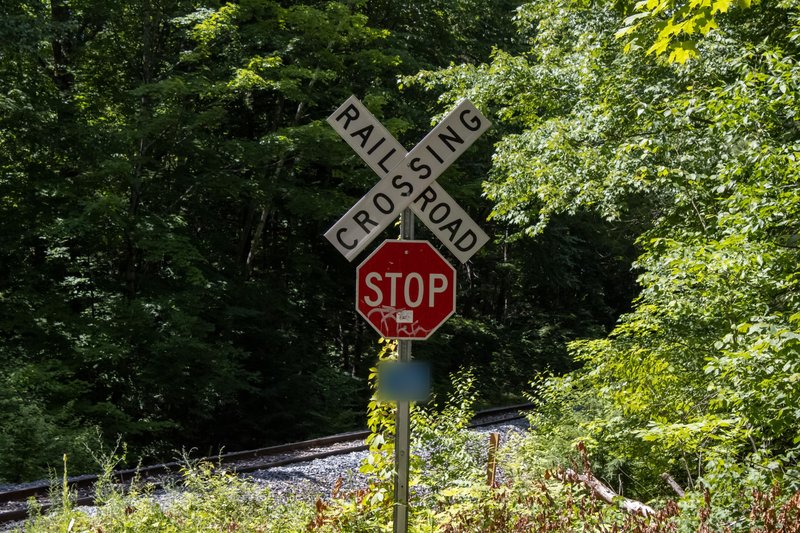
Train crossing crashes are among the most lethal on the road, and they carry a legal complication most cases do not: federal preemption. Depending on how a crossing’s warning devices were funded and approved, federal law may bar a claim that the signs and signals there were inadequate. That does not mean railroads escape responsibility. Other theories often remain available, including failure to sound the horn, obstructed sight lines, blocked crossings, and negligent operation. Sorting out which claims survive is the first task in any Tennessee crossing case.
The leading Supreme Court decision on this question came out of a Tennessee crossing.
Table of Contents
What Did the Supreme Court Decide?
In Norfolk Southern Railway Co. v. Shanklin, 529 U.S. 344 (2000), a man was killed when a train struck his vehicle at a crossing in western Tennessee marked with advance warning signs and reflectorized crossbucks. His widow sued, arguing the warning devices were inadequate.
The Court held that the Federal Railroad Safety Act, together with federal highway regulations at 23 CFR Sections 646.214(b)(3) and (4), preempts state tort claims that warning devices were inadequate at crossings where federal funds participated in installing those devices. Because the Tennessee Department of Transportation had used federal funds, the federal standard for adequacy displaced state law on that subject.
The Court noted that nothing stops a state from revisiting the adequacy of devices or installing more protective ones. What a state cannot do is hold the railroad responsible for the adequacy of federally funded devices.
Which Claims Can Still Be Brought?
Preemption is narrower than railroads often suggest. It addresses the adequacy of warning devices at federally funded crossings. Claims frequently litigated outside that zone include:
- Failure to sound the horn or whistle as required on approach
- Failure to maintain sight lines, including vegetation, brush, and stored equipment obscuring an approaching train
- Blocking the crossing for extended periods or leaving standing cars obstructing the view
- Failure to maintain the crossing surface, where rough or elevated track causes a vehicle to stall
- Negligent operation, including failure to brake or keep a proper lookout
- Malfunctioning signals, meaning gates or lights that failed to activate, which differs from arguing the devices chosen were the wrong ones
- Failure to repair known defects in equipment at the crossing
Speed claims are more constrained. Where a train operated within federal speed limits, excessive speed claims have generally been held preempted.
The distinction worth holding onto: arguing that a crossing should have had gates instead of crossbucks is the preempted theory. Arguing that the gates that existed did not work, or that brush hid the train, generally is not.
Who Can Be Held Responsible?
Crossing cases often involve several potential defendants:
- The railroad, for operation, horn use, vegetation control, and crossing maintenance
- The train crew, for lookout and braking
- A state or local government, for roadway design, approach grades, and sight distance on the highway side
- A contractor, where signal maintenance or vegetation control was outsourced
Claims against the state proceed through the Tennessee Claims Commission, which has exclusive jurisdiction over monetary claims against the state and caps damages at $300,000 per claimant and $1,000,000 per occurrence. Claims against a city or county fall under the Governmental Tort Liability Act, with a 12-month deadline and its own caps.
What About the Driver’s Duty?
Tennessee law requires drivers to stop at railroad grade crossings when a signal gives warning, a gate is lowered, a flagman signals, or an approaching train is plainly visible and in hazardous proximity. Railroads lean on this heavily, and the argument that a driver simply failed to look is standard.
It rarely ends the case. Tennessee applies modified comparative fault, so a driver assigned some responsibility can still recover as long as that share stays below 50 percent, with the award reduced accordingly. And a driver’s duty to look presumes there was something to see. Where vegetation blocked the view, no horn sounded, or signals failed, the railroad’s conduct is what created the danger.
What Evidence Decides These Cases?
Railroad evidence is technical and controlled by the defendant:
- Locomotive event recorder data, showing speed, throttle, braking, and horn activation
- Forward-facing and inward-facing camera footage
- Signal maintenance and inspection records for that crossing
- Crossing inventory records identifying devices and funding history
- Vegetation control records and photographs of sight lines
- Crew statements, logs, and training records
- Prior incident history at the same crossing
- Funding documentation, which determines whether preemption applies at all
That last item is the threshold question. Whether federal funds participated in the installation of the devices decides which theories remain available, and it is established through records rather than assumption.
Photograph sight lines quickly. Vegetation gets cut after a crash, and the view a driver actually had can change within days.
Train Crossing FAQs
Does federal preemption mean I cannot sue the railroad?
No. Preemption addresses the adequacy of federally funded warning devices. Claims about horn use, vegetation, malfunctioning signals, blocked crossings, and negligent operation often remain available.
The crossing only had crossbucks and no gates. Is that a claim?
Possibly not, if federal funds participated in installing those devices. That is precisely the theory addressed in Shanklin, which makes the funding records critical.
What if the gates did not come down?
A malfunction claim is different from arguing the wrong devices were selected, and it is generally not preempted.
How long do I have to file in Tennessee?
Generally one year from the crash under Tennessee Code Section 28-3-104, with a 12-month path and formal notice requirements for governmental defendants.
After a Crossing Crash, the First Question Is Which Claims Survive
Railroads move quickly after a collision, and families are often told the driver was at fault and federal law bars any claim. Both assertions deserve testing against event recorder data, signal records, vegetation photographs, and the crossing’s funding history.
The Higgins Firm handles car accident and catastrophic injury claims, including crossing collisions, across Tennessee. Reach us through our contact page for a free case review. You pay nothing unless we recover money for you.
Author Bio

Jim Higgins, founder of the Higgins Firm, is a seasoned personal injury attorney with deep roots in Nashville, Tennessee. A 4th generation Nashvillian, Jim carries on the legal legacy of his father, a judge for over 30 years. After graduating from the University of Memphis School of Law, Jim’s career began on the other side of the courtroom, defending insurance companies and learning their tactics for minimizing settlements. However, he soon realized his true calling was fighting for the rights of the injured, and for the past several years, he has exclusively represented plaintiffs in personal injury cases.
Since then, his dedication and skill have earned him membership in the prestigious Million Dollar Advocates Forum, an organization limited to attorneys who have secured million and multi-million dollar verdicts and settlements for their clients. Licensed to practice in Tennessee, Kentucky, and Georgia, Jim focuses on personal injury, product liability, medical malpractice, and workers’ compensation cases. His exceptional work has been recognized by his peers, earning him a spot on the Super Lawyers list from 2021 to 2024, a distinction awarded to only a select group of accomplished attorneys in each state.