Defective Guardrail Injury Claims in Tennessee
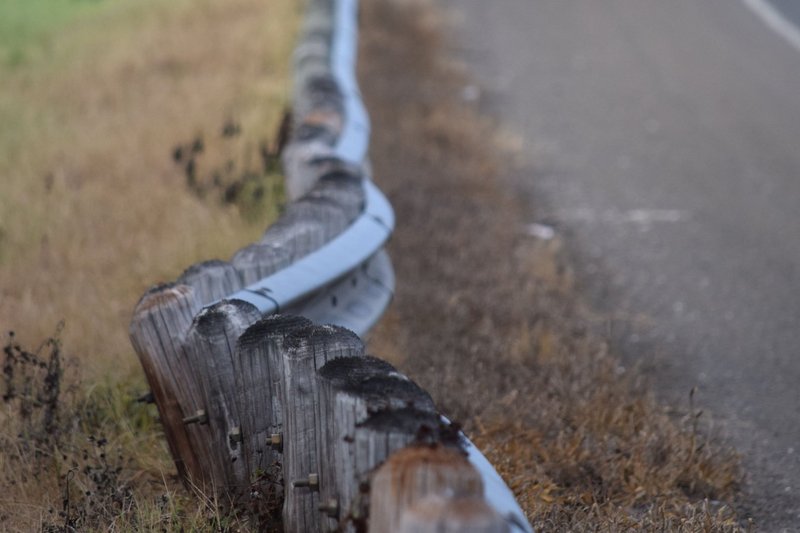
A guardrail is supposed to absorb a crash and redirect your vehicle. When it fails, it can do the opposite, with the end terminal locking up and driving through the car like a spear. If you or a family member was injured by a guardrail that malfunctioned in Tennessee, you may have a product liability claim against the manufacturer and, separately, a claim against the government entity responsible for installing or maintaining it. The two run on very different tracks with different deadlines and procedures.
These are difficult cases, and they begin with preserving the hardware before a road crew hauls it away.
Table of Contents
How Are Guardrail End Terminals Supposed to Work?
The exposed end of a guardrail is the most dangerous point, so engineers developed energy-absorbing end terminals. On a head-on impact, the terminal head is designed to slide along the rail and force the steel to bend outward, flattening and “ribboning” it away from the vehicle while dissipating crash energy.
When a terminal performs as designed, the rail peels aside. When it fails, the terminal can jam and stop feeding the rail through, leaving the guardrail to penetrate the passenger compartment. The injuries that follow are severe and often include amputations.
What Is the History With These Products?
One product drew sustained national scrutiny. The ET-Plus end terminal, made by Trinity Industries and developed from a design originating at a university transportation institute, became the subject of a federal whistleblower case alleging the company changed the terminal’s dimensions without properly disclosing the change to federal authorities. A jury returned a large verdict, which a federal appeals court later reversed.
Trinity has denied that its terminals are defective and has maintained that they were crash tested. Federal highway authorities conducted a safety review of ET-Plus crash data and stated that the terminal met applicable crash testing criteria. Even so, a number of states suspended new installations during the controversy, and separate personal injury and wrongful death suits have proceeded on state product liability theories. Terminals made by other manufacturers, including X-LITE units, have also been the subject of injury claims.
The takeaway is not that any particular guardrail is defective. It is that these claims are actively litigated, that federal acceptance of a product does not automatically bar a state product liability claim, and that the specific hardware involved in your crash needs to be identified and examined.
Product Liability Claim Against the Manufacturer
Tennessee’s Products Liability Act, Tennessee Code Section 29-28-101 and following, allows claims where a product was unreasonably dangerous when it left the maker’s control. A guardrail claim can allege:
- Design defect, where the terminal’s design makes failure foreseeable
- Manufacturing defect, where a specific unit departed from its design
- Failure to warn, where risks were known and not disclosed to the states installing the product
Compliance with a government standard gives a manufacturer a rebuttable presumption that the product was not unreasonably dangerous under Section 29-28-104. Rebuttable is the operative word. Evidence that a company changed a design without disclosure, or concealed performance data, can overcome it.
Product claims also face a statute of repose in Section 29-28-103, generally requiring the action within six years of injury and within ten years of first purchase, so timing questions deserve early attention.
Claim Against the Government Entity
Who maintains the road determines the forum.
State highways. The Tennessee Claims Commission has exclusive jurisdiction over monetary claims against the state. Relevant categories under Tennessee Code Section 9-8-307(a)(1) include negligence in the design, construction, and maintenance of highways on the state system, and dangerous conditions on state maintained highways. For that last category, the claimant must establish the foreseeability of the risk and that notice was given to the proper state officials far enough in advance for the state to act. Damages against the state are capped at $300,000 per claimant and $1,000,000 per occurrence, and a written notice of claim is required.
City and county roads. These claims proceed under the Governmental Tort Liability Act, with a 12-month deadline, caps of $300,000 per person and $700,000 per occurrence, and no jury.
Common theories include installing a terminal incorrectly, installing a unit the state had suspended, using a damaged or previously struck terminal, and failing to repair a guardrail that had already been hit.
Preserving the Evidence
This is the step that decides most guardrail cases, and the window is short:
- Photograph the terminal and rail from multiple angles before anything is removed
- Document the stamped markings on the terminal head identifying the manufacturer and model
- Record the exact location by mile marker and GPS
- Request that the hardware be preserved rather than scrapped, in writing and immediately
- Photograph the vehicle and how the rail entered it
- Obtain installation and maintenance records for that section of road
- Keep the vehicle and do not allow it to be repaired or crushed
Road crews replace damaged guardrails quickly. Within days, the terminal that injured you may be in a scrap pile.
Guardrail Injury FAQs
Does federal approval of a guardrail block my claim?
Not automatically. Regulatory compliance creates a rebuttable presumption in Tennessee, not immunity, and evidence of undisclosed design changes can overcome it.
What if I lost control before hitting the guardrail?
You may still have a claim. A guardrail is meant to reduce harm from exactly that situation. Comparative fault may reduce recovery but does not bar it below 50 percent.
Can I sue the state for a bad guardrail?
Possibly, through the Tennessee Claims Commission, but you must show foreseeability and prior notice to state officials, and damages are capped.
How long do I have?
Generally one year from the crash for injury claims, with a shorter 12-month path and formal notice steps for local government claims. The hardware may disappear within days.
When the Barrier Meant to Protect You Caused the Injury
Guardrail cases require identifying the specific hardware, preserving it, and pursuing manufacturer and government paths that operate under entirely different rules. All of that depends on acting before the damaged terminal is replaced and hauled off.
The Higgins Firm handles car accident and catastrophic injury claims across Tennessee. Reach us through our contact page for a free case review. You pay nothing unless we recover money for you.
Author Bio

Jim Higgins, founder of the Higgins Firm, is a seasoned personal injury attorney with deep roots in Nashville, Tennessee. A 4th generation Nashvillian, Jim carries on the legal legacy of his father, a judge for over 30 years. After graduating from the University of Memphis School of Law, Jim’s career began on the other side of the courtroom, defending insurance companies and learning their tactics for minimizing settlements. However, he soon realized his true calling was fighting for the rights of the injured, and for the past several years, he has exclusively represented plaintiffs in personal injury cases.
Since then, his dedication and skill have earned him membership in the prestigious Million Dollar Advocates Forum, an organization limited to attorneys who have secured million and multi-million dollar verdicts and settlements for their clients. Licensed to practice in Tennessee, Kentucky, and Georgia, Jim focuses on personal injury, product liability, medical malpractice, and workers’ compensation cases. His exceptional work has been recognized by his peers, earning him a spot on the Super Lawyers list from 2021 to 2024, a distinction awarded to only a select group of accomplished attorneys in each state.