Can You Sue a Nashville Bar for Overserving the Person Who Injured You?
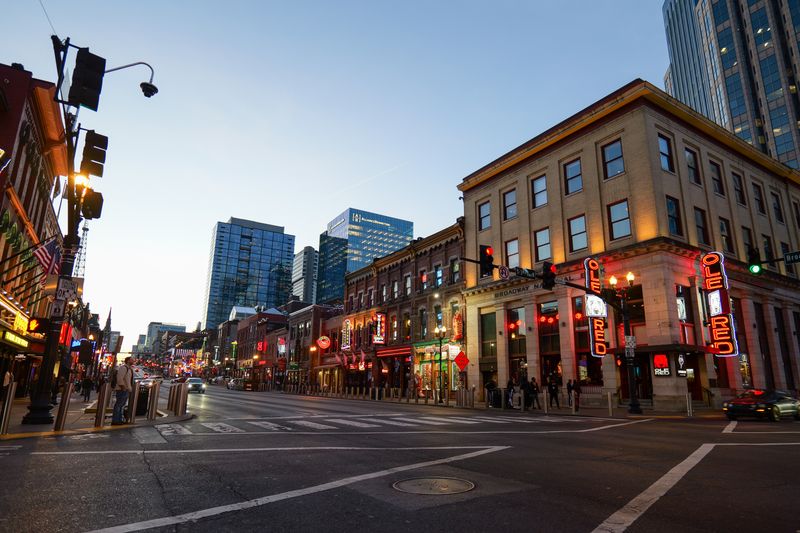
If a drunk stranger hurt you on Lower Broadway, the bar that served them may share legal responsibility. Tennessee law generally treats drinking, not serving, as the cause of an intoxicated person’s actions. But there are two exceptions. A bar can be liable when it served someone it knew to be under 21, or when it served someone who was visibly intoxicated, and that person’s drinking directly caused your injury. On top of that, the venue may owe you a separate duty as a patron on its property.
Nashville’s downtown entertainment district packs enormous crowds into a few blocks of bars. When servers keep pouring for someone already staggering, the consequences land on other people.
Table of Contents
When Can a Nashville Bar Be Held Liable?
Tennessee’s starting point is protective of sellers. Under Tennessee Code Section 57-10-101, the legislature declared that consuming alcohol, rather than furnishing it, is the proximate cause of injuries inflicted by an intoxicated person.
Section 57-10-102 creates the exceptions. A seller can be liable when it sold alcohol to:
- A person known to be under 21, who then caused injury or death as a direct result of drinking it, or
- A visibly intoxicated person, who then caused injury or death as a direct result of drinking it
There is a demanding catch. A jury of twelve must find beyond a reasonable doubt that the sale was the proximate cause of the injury or death. That is the criminal standard applied inside a civil case, and Tennessee is unusual in requiring it. These claims are provable, but only with disciplined evidence gathering.
What If the Bar Did Not Serve the Person Who Hurt Me?
You may still have a claim. A dram shop claim targets the seller of the alcohol. A negligent security claim targets the venue where you were hurt, and it does not depend on who was served.
Under McClung v. Delta Square Limited Partnership, 937 S.W.2d 891 (Tenn. 1996), a business owes patrons a duty to take reasonable security measures when harm is foreseeable. Courts weigh the foreseeable probability and gravity of harm against the burden of preventing it, and prior similar incidents on or near the property weigh heavily.
On a strip with a documented history of fights, glassings, and assaults, foreseeability is rarely a mystery. A venue that runs at capacity with too few trained staff, no crowd management, and no working cameras has a problem.
What About the Bouncer Who Made It Worse?
Security staff can turn a scuffle into a catastrophic injury. Tennessee now regulates who may work security where alcohol is served.
Under Tennessee Code Section 62-35-118, a guard working at an establishment licensed for on-premises consumption must, within 15 days of employment, complete training in de-escalation and proper and safe restraint techniques, plus first aid and CPR. These requirements came from Dallas’s Law, named for Dallas Barrett, who died in 2021 after an altercation with security guards at a bar in the Lower Broadway area. The rules took effect January 1, 2023.
Tennessee also makes it unlawful to knowingly employ a security guard without valid registration. If the person who injured you was unregistered or untrained, that becomes real evidence.
What Evidence Matters, and How Fast Does It Disappear?
Downtown cases live and die on records that get erased quickly:
- Bar surveillance video, often overwritten within days or weeks
- Street and business cameras nearby
- Point-of-sale records and tabs showing how many drinks were served and when
- Server and bouncer identities, in an industry with heavy turnover
- Witness accounts of stumbling, slurring, or being cut off and served anyway
- Toxicology results from any criminal case
- Guard registration and training records
- Prior incident reports at that venue
Photos and video from your own phone and your friends’ phones matter too. So does a police report, even if you feel fine at the scene.
What Should You Do After an Incident Downtown?
- Get medical care immediately, especially after any blow to the head
- Call police and get an incident number
- Identify witnesses before the crowd scatters
- Photograph injuries over the following days as bruising develops
- Save receipts and card statements showing where you were
- Contact a lawyer quickly so preservation letters go out before footage is gone
Lower Broadway Injury FAQs
What if I had been drinking too?
You can still recover. Tennessee uses modified comparative fault, so your award is reduced by your percentage of fault and is barred only if you are 50 percent or more at fault.
What if the person who hit me was never arrested?
That does not end your civil claim. Claims against the bar or venue are separate from any criminal prosecution.
Can I sue if I was hurt on the sidewalk outside?
Possibly. Where the harm occurred affects which theories apply, but dram shop liability follows the sale of alcohol, not the property line.
How long do I have to file?
Generally, one year from the date of injury under Tennessee Code Section 28-3-104. Evidence downtown disappears far sooner than that.
A Night Downtown Should Not Cost You Your Health
When an overserved stranger puts you in the hospital, the bar that kept pouring and the venue that skimped on trained security may both bear responsibility. Proving it takes video, sales records, and staffing files that are easiest to secure in the first days.
The Higgins Firm handles dram shop and negligent security claims in Nashville and across Tennessee. Reach us through our contact page for a free case review. You pay nothing unless we recover money for you.
Author Bio

Jim Higgins, founder of the Higgins Firm, is a seasoned personal injury attorney with deep roots in Nashville, Tennessee. A 4th generation Nashvillian, Jim carries on the legal legacy of his father, a judge for over 30 years. After graduating from the University of Memphis School of Law, Jim’s career began on the other side of the courtroom, defending insurance companies and learning their tactics for minimizing settlements. However, he soon realized his true calling was fighting for the rights of the injured, and for the past several years, he has exclusively represented plaintiffs in personal injury cases.
Since then, his dedication and skill have earned him membership in the prestigious Million Dollar Advocates Forum, an organization limited to attorneys who have secured million and multi-million dollar verdicts and settlements for their clients. Licensed to practice in Tennessee, Kentucky, and Georgia, Jim focuses on personal injury, product liability, medical malpractice, and workers’ compensation cases. His exceptional work has been recognized by his peers, earning him a spot on the Super Lawyers list from 2021 to 2024, a distinction awarded to only a select group of accomplished attorneys in each state.