Tennessee Underride Truck Accident Claims
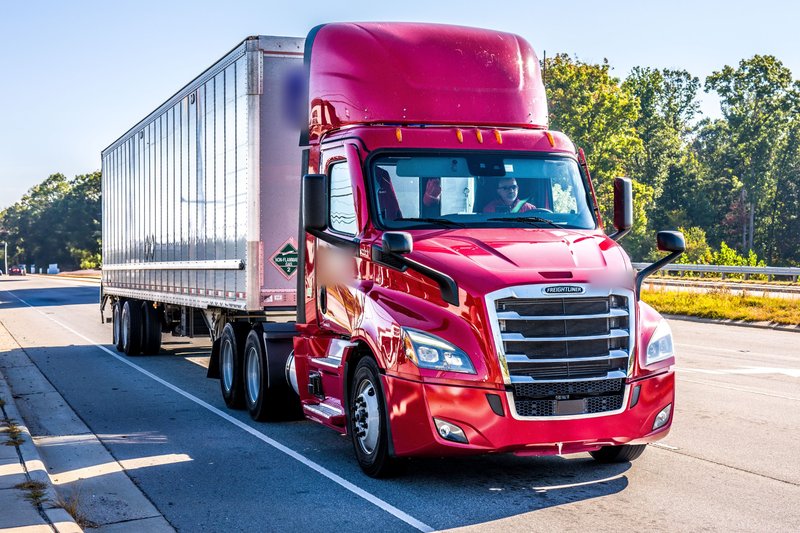
An underride crash happens when a passenger vehicle slides beneath a trailer. These wrecks are catastrophic because the trailer bed strikes the car at window height, bypassing the crumple zones, airbags, and structure designed to protect occupants. If you or a family member was hurt in an underride collision in Tennessee, you may have claims against the truck driver, the motor carrier, the trailer manufacturer, and others. A central question is whether the trailer’s underride guard was present, compliant, and functional.
These cases turn on equipment standards that most people have never heard of, and on evidence that is scrapped quickly.
Table of Contents
What Are Rear Underride Guards Required to Do?
Two federal standards govern the steel bar at the back of a trailer:
- FMVSS No. 223, “Rear impact guards,” an equipment standard specifying strength and energy absorption requirements for guards sold for installation on new trailers.
- FMVSS No. 224, “Rear impact protection,” a vehicle standard requiring new trailers and semitrailers with a gross vehicle weight rating of 10,000 pounds or more to be equipped with a guard meeting FMVSS No. 223.
Together, they require a guard configured low and wide to block a striking vehicle, strong enough to withstand impact, and capable of absorbing energy to reduce harm to occupants of the striking car.
In 2022, federal regulators upgraded both standards, raising the crash speed the guards must handle to 35 miles per hour and aligning with Canadian requirements that protect occupants of compact and subcompact cars. The upgrade was directed by Congress in the Bipartisan Infrastructure Law. Federal motor carrier regulators also added rear impact guards to the list of items that must be examined during the required annual inspection of each commercial vehicle.
What About Side Underride?
This is where the law lags the danger. A car striking the side of a trailer can slide underneath just as it can at the rear, and the results are equally severe. There is currently no federal requirement that trailers be equipped with side underride guards, though the issue has been the subject of research and an advisory committee created under the same infrastructure law.
The absence of a federal mandate does not end a claim. It shifts the analysis toward design defect principles: whether a reasonably safe alternative design existed, whether the risk was known, and whether the manufacturer acted reasonably. Side underride cases are harder, but they are not automatically barred.
Who Can Be Held Responsible?
Underride claims commonly reach several defendants:
- The truck driver, for stopping in a travel lane, backing across a road, turning across traffic, or operating without required lighting
- The motor carrier, for inadequate maintenance, poor training, or dispatch pressure
- The trailer manufacturer, where the guard was defective, poorly designed, or improperly attached
- A maintenance provider, where a damaged or corroded guard was never repaired
- A cargo loader or shipper, in some circumstances
Inspection history matters enormously. A guard that was rusted, bent from a prior impact, or missing entirely, and that appeared on no inspection report, points directly at maintenance failures.
Why Reflective Tape and Lighting Matter
Many underride crashes happen at night or in poor visibility. Federal rules require conspicuity treatment, meaning retroreflective tape or reflectors, on trailers so they can be seen from a distance. Missing, dirty, painted-over, or damaged tape is a recurring issue in these cases, as are burned-out trailer lights.
When a trailer is stopped, disabled, or blocking a roadway, warning device requirements also come into play. A driver who fails to deploy warning triangles after stopping on a shoulder or in a lane has created exactly the hazard those rules exist to prevent.
What Evidence Must Be Preserved?
Underride evidence disappears fast, and much of it is controlled by the carrier:
- The trailer and the guard itself, which should be inspected before repair or scrapping
- Photographs of the guard, including deformation, corrosion, welds, and mounting points
- Annual inspection reports and maintenance records for the trailer
- Electronic logging device and engine control module data
- Dash and side camera footage
- Driver qualification file and training records
- Conspicuity tape condition documented at the scene
- Scene photographs showing lighting, sight lines, and final positions
A spoliation letter demanding preservation of the trailer and its records should go out within days. Once a trailer is repaired or sold, the central piece of proof is gone.
Underride Accident FAQs
Is an underride crash automatically the car driver’s fault?
No. Carriers often argue the car followed too closely or was speeding. Whether the guard complied with federal standards, whether the trailer was visible, and how the truck was positioned are all independent questions.
Are side underride guards required?
Not under current federal standards. Claims involving side underride generally proceed on design defect theories rather than a violation of a mandate.
What compensation is available?
Medical bills and lost earnings without a cap, pain and suffering subject to Tennessee’s limits, and wrongful death damages. Punitive damages may apply where a company knew of a danger and acted anyway.
How long do I have to file in Tennessee?
Generally, one year from the crash under Tennessee Code Section 28-3-104. Trailers and records can be gone well before that.
When a Trailer’s Last Line of Protection Failed
Underride crashes produce injuries far worse than the speed alone would suggest, because the part of the vehicle designed to protect you never engaged. Whether the guard met federal standards, and whether anyone had inspected it, are answerable questions, but only while the trailer still exists.
The Higgins Firm handles truck accident and catastrophic injury claims across Tennessee. Reach us through our contact page for a free case review. You pay nothing unless we recover money for you.
Author Bio

Jim Higgins, founder of the Higgins Firm, is a seasoned personal injury attorney with deep roots in Nashville, Tennessee. A 4th generation Nashvillian, Jim carries on the legal legacy of his father, a judge for over 30 years. After graduating from the University of Memphis School of Law, Jim’s career began on the other side of the courtroom, defending insurance companies and learning their tactics for minimizing settlements. However, he soon realized his true calling was fighting for the rights of the injured, and for the past several years, he has exclusively represented plaintiffs in personal injury cases.
Since then, his dedication and skill have earned him membership in the prestigious Million Dollar Advocates Forum, an organization limited to attorneys who have secured million and multi-million dollar verdicts and settlements for their clients. Licensed to practice in Tennessee, Kentucky, and Georgia, Jim focuses on personal injury, product liability, medical malpractice, and workers’ compensation cases. His exceptional work has been recognized by his peers, earning him a spot on the Super Lawyers list from 2021 to 2024, a distinction awarded to only a select group of accomplished attorneys in each state.