Attacked at a Hotel or Motel: Is the Property Liable?
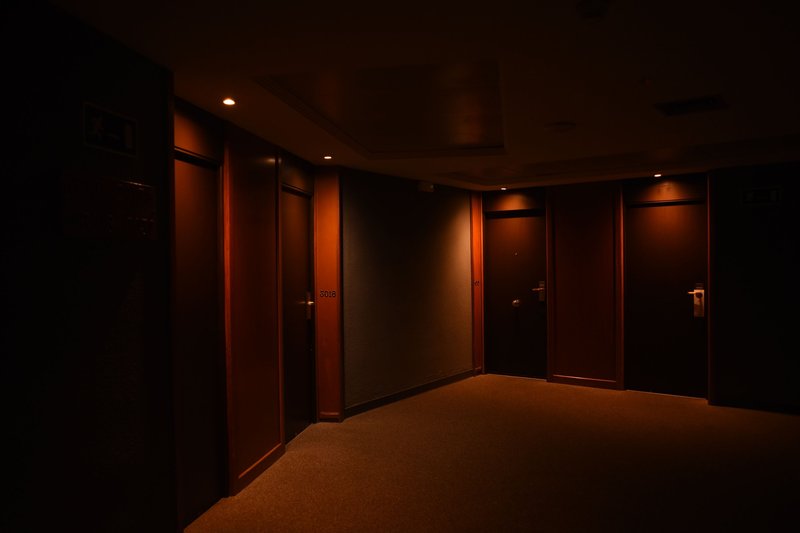
If you were assaulted, robbed, or attacked at a hotel or motel, the property may be legally responsible in Tennessee. Hotels occupy a special position in the law. Courts have long recognized the innkeeper and guest relationship as one that carries heightened duties, and a hotel that ignored a known crime problem, handed out keys carelessly, or let door locks and cameras fail can be held accountable. The question is whether the attack was foreseeable and whether the hotel took reasonable security measures in response.
You paid for a place to sleep safely. Here is when the law agrees that was the hotel’s obligation.
Table of Contents
What Duty Does a Hotel Owe Its Guests?
Tennessee courts have recognized the innkeeper and guest relationship as one of the special relationships that can create a duty to protect someone from the criminal acts of third parties. That framework is discussed in Tedder v. Raskin, 728 S.W.2d 343 (Tenn. Ct. App. 1987), which traces how courts extended protective duties beyond traditional categories.
For premises generally, the modern Tennessee standard comes from McClung v. Delta Square Limited Partnership, 937 S.W.2d 891 (Tenn. 1996). A business owes a duty of reasonable care when the foreseeable probability and gravity of harm outweigh the burden of taking preventive measures. Prior similar crimes on or near the property carry significant weight in that analysis.
Put simply: the more a hotel knew about crime on its property, the more the law expected it to do.
What Counts as Inadequate Hotel Security?
Common failures that support these claims include:
- Broken or inadequate door locks, including deadbolts and secondary latches that do not work
- Key control failures, such as issuing a room key to someone who was not a registered guest or failing to deactivate old keycards
- No cameras, cameras that do not record, or blind spots in hallways, stairwells, and lots
- Unsecured entrances and stairwells allowing anyone to walk in from the parking lot at any hour
- No security staff where the crime history called for it, or cutting patrols that previously existed
- Poor lighting in parking areas, breezeways, and exterior corridors
- Ignoring a known pattern of assaults, thefts, drug activity, or trafficking on the property
- Failing to warn guests about recent violent crime
Key control deserves emphasis. Many hotel assault cases involve an attacker who obtained a key or was let into a room. A front desk that hands out a key without verifying identity has created the danger rather than merely failing to prevent it.
Does It Matter Whether the Attacker Was a Guest?
Not much. The duty runs to the hotel’s guests, not away from certain categories of attackers. A claim can arise whether the assailant was another guest, an employee, or a stranger who walked in off the street.
Employee-involved attacks raise an additional theory. Beyond responsibility for an employee’s conduct on the job, a hotel may be liable for its own negligence in hiring someone with a violent history, failing to run background checks, or failing to supervise staff with master key access.
How Do You Prove the Attack Was Foreseeable?
Foreseeability is where these cases are won, and most proof sits in third-party records:
- Police call history for the property address, often showing years of incidents
- Reported offense data for the surrounding area
- Prior guest complaints about security, locks, or suspicious activity
- Incident reports the hotel prepared for earlier crimes
- Maintenance and work order records for locks, lighting, and cameras
- Key card audit logs, which can show exactly which key opened the door and when
- Camera footage, frequently overwritten within days
- Franchise brand standards, since many chains impose security requirements on franchisees
- Staffing and training records
Key card logs are uniquely powerful evidence and uniquely perishable. They can establish whether an attacker used a valid key and where that key came from.
Who Can Be Held Responsible?
Hotels often involve layered ownership, and more than one company may share fault:
- The property owner, frequently a single-purpose entity
- The management company running daily operations
- The franchisor, in some circumstances, depending on the degree of control exercised
- A security contractor
- A maintenance contractor responsible for locks, lighting, or cameras
Tennessee applies modified comparative fault, so responsibility can be divided. You can recover as long as your own share stays below 50 percent, with your award reduced by your percentage.
Hotel and Motel Attack FAQs
Does it matter that the attacker was never caught?
No. Your claim against the hotel is separate from the criminal investigation, and many of these cases proceed without an identified assailant.
The hotel says it is not responsible for crimes committed by strangers. Is that right?
Not as a blanket rule. Tennessee weighs foreseeability against the burden of prevention, and a hotel with a documented crime history may owe substantial security measures.
What if I was attacked in the parking lot rather than my room?
Parking areas are commonly part of these claims. Lighting, cameras, and patrols in lots are frequently at issue.
How long do I have to file in Tennessee?
Generally, one year from the attack under Tennessee Code Section 28-3-104. Key card logs and camera footage often disappear within weeks.
When the Place You Paid to Stay Failed to Keep You Safe
Hotels market safety and charge for it. When a property ignores its own crime history, lets locks and cameras fail, or hands a key to the wrong person, the consequences belong to the business, not the guest. The records that prove what the hotel knew exist now and will not indefinitely.
The Higgins Firm investigates negligent security and premises liability claims at hotels and motels across Tennessee. Reach us through our contact page for a free, confidential review. You pay nothing unless we recover money for you.
Author Bio

Jim Higgins, founder of the Higgins Firm, is a seasoned personal injury attorney with deep roots in Nashville, Tennessee. A 4th generation Nashvillian, Jim carries on the legal legacy of his father, a judge for over 30 years. After graduating from the University of Memphis School of Law, Jim’s career began on the other side of the courtroom, defending insurance companies and learning their tactics for minimizing settlements. However, he soon realized his true calling was fighting for the rights of the injured, and for the past several years, he has exclusively represented plaintiffs in personal injury cases.
Since then, his dedication and skill have earned him membership in the prestigious Million Dollar Advocates Forum, an organization limited to attorneys who have secured million and multi-million dollar verdicts and settlements for their clients. Licensed to practice in Tennessee, Kentucky, and Georgia, Jim focuses on personal injury, product liability, medical malpractice, and workers’ compensation cases. His exceptional work has been recognized by his peers, earning him a spot on the Super Lawyers list from 2021 to 2024, a distinction awarded to only a select group of accomplished attorneys in each state.